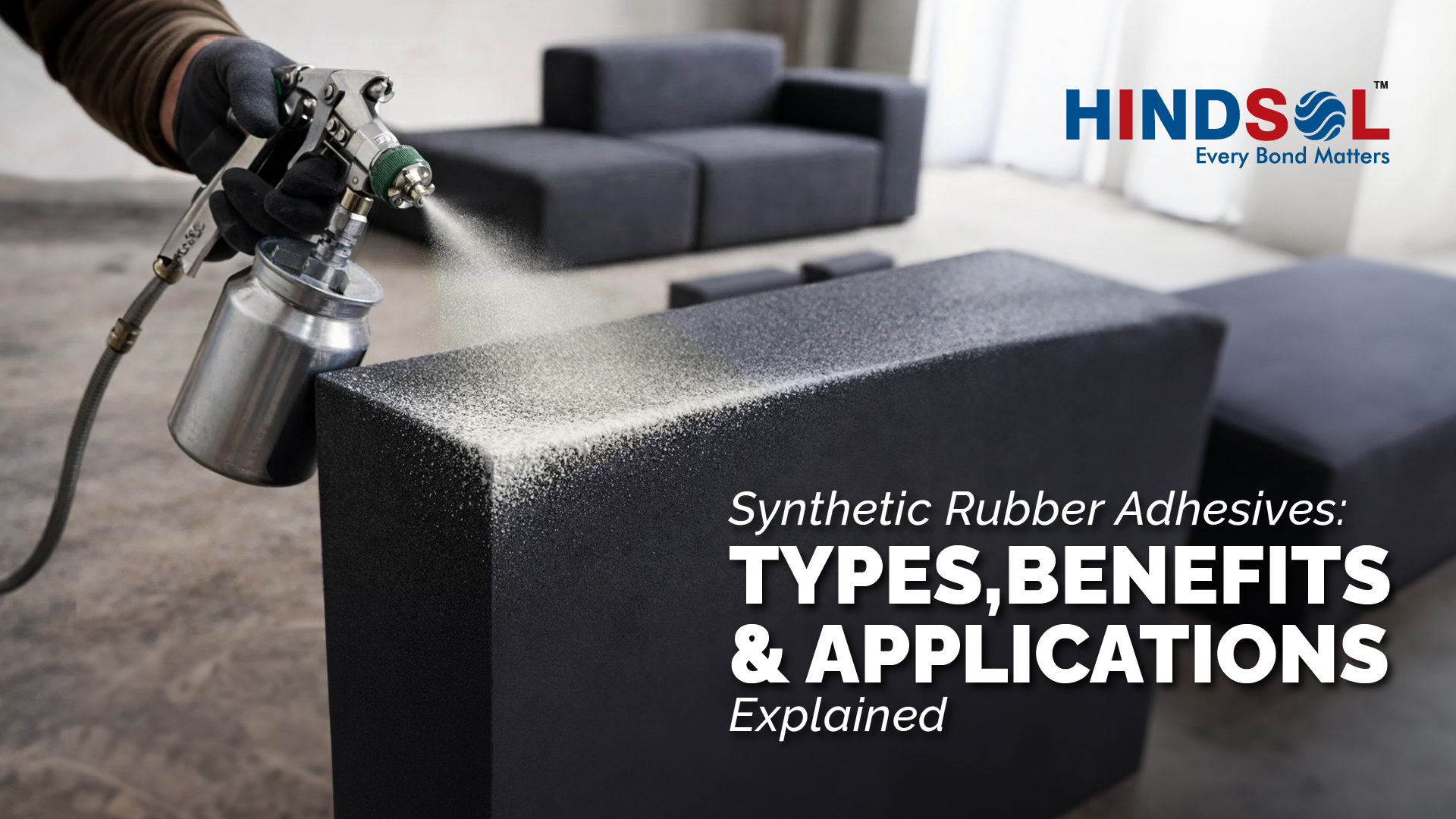
Synthetic Rubber Adhesives: Types, Benefits & Applications
Adhesives have become an essential part of modern manufacturing where durability, flexibility, and material compatibility are critical. Among the many adhesive technologies available today, synthetic rubber adhesives stand out for their ability to deliver reliable bonding across a wide range of materials and operating conditions. From automotive components to footwear manufacturing and foam bonding, these adhesives provide the strength and resilience needed in demanding production environments.
Manufacturers increasingly rely on industrial rubber adhesives because they offer strong adhesion, quick bonding, and excellent resistance to vibration, moisture, and temperature variations. These properties make them particularly valuable in applications where traditional mechanical fastening methods may not provide the same level of efficiency or flexibility. Understanding the types of synthetic rubber adhesives, their advantages, and where they are most effectively used helps industries select the right bonding technology for their production processes.
Understanding Synthetic Rubber Adhesives
Synthetic rubber adhesives are formulated using synthetic elastomer polymers that provide flexible yet durable bonding. Unlike brittle adhesives that can crack under stress, rubber-based formulations maintain elasticity while delivering reliable adhesion between different materials.
These adhesives are commonly used where materials expand, contract, or experience vibration during operation. Their ability to maintain strong bonds under dynamic conditions makes them effective synthetic rubber bonding solutions for industries requiring both strength and flexibility.
Another advantage is their compatibility with multiple substrates. Industrial rubber adhesives can bond materials such as rubber, foam, metal, leather, plastics, wood, and fabrics, making them highly versatile for industrial assembly operations.
Types of Synthetic Rubber Adhesives
Different manufacturing requirements call for different adhesive formulations. Understanding the types of synthetic rubber adhesives helps manufacturers choose the right solution based on application needs.
Contact Adhesives
Contact adhesives are widely used high strength rubber adhesives that form an instant bond when two coated surfaces are pressed together. They are particularly useful for applications requiring quick assembly and strong initial tack.
Sprayable Rubber Adhesives
Sprayable adhesive formulations are designed for large surface coverage and uniform adhesive application. These adhesives are commonly used in foam bonding, upholstery assembly, and automotive interiors where consistent coverage is essential.
Brushable Rubber Adhesives
Brushable adhesives provide greater control during application. They are ideal for detailed bonding work where precision is important, such as component assembly or smaller bonding areas.
Solvent Based Rubber Adhesives
Solvent based synthetic rubber formulations offer strong bonding performance and quick drying properties. They are frequently used where high bond strength and rapid production cycles are required.
Each of these adhesive technologies plays a role in delivering effective synthetic rubber bonding solutions for industrial manufacturing processes.
Benefits of Synthetic Rubber Adhesive
The growing adoption of synthetic rubber adhesives in manufacturing is driven by several practical advantages that improve production efficiency and product durability.
Strong and Flexible Bonds
One of the primary benefits of synthetic rubber adhesive is the ability to provide strong bonds while maintaining flexibility. This characteristic is particularly important for materials that experience movement, vibration, or thermal expansion.
Excellent Material Compatibility
Rubber adhesives work effectively with many substrates including foam, leather, metal, wood, and plastics. This versatility supports a wide range of rubber based adhesive uses across industries.
Resistance to Environmental Stress
Many high strength rubber adhesives are formulated to resist heat, moisture, and mechanical stress. This makes them suitable for manufacturing environments where conditions can fluctuate significantly.
Efficient Production Performance
Fast drying time and strong initial tack help manufacturers reduce assembly time and improve production efficiency. This is especially valuable in high-volume manufacturing operations.
Synthetic Rubber Adhesive Applications
The adaptability of rubber based adhesives allows them to be used in a wide variety of industrial applications. These synthetic rubber adhesive applications continue to expand as manufacturers seek efficient bonding solutions.
Footwear Manufacturing
One of the most common uses is rubber adhesive for footwear industry production. Adhesives are used for bonding soles, leather uppers, synthetic materials, and EVA components. The flexibility of rubber adhesives supports comfortable and durable footwear construction.
Automotive Components
In automotive manufacturing, adhesives are used for bonding interior materials, foam padding, insulation components, and trim elements. Rubber based adhesives provide the flexibility required to withstand vibration and temperature fluctuations inside vehicles.
Furniture and Foam Assembly
Furniture manufacturing frequently relies on rubber adhesives to bond foam, fabric, wood, and cushioning materials. Sprayable formulations help manufacturers achieve uniform coverage during upholstery production.
Rubber to Metal Bonding
Certain industrial applications require adhesives for rubber to metal bonding, such as sealing systems, gaskets, and mechanical components. Rubber adhesives provide the combination of strength and elasticity required for these applications.
Choosing the Right Synthetic Rubber Adhesive
Selecting the correct adhesive depends on several factors including substrate type, environmental conditions, and production method. Manufacturers often evaluate viscosity, curing speed, bond strength, and compatibility with the materials being joined.
By choosing well-formulated industrial rubber adhesives, manufacturers can improve product durability, reduce assembly complexity, and maintain consistent bonding performance across production batches.
In the end
As manufacturing processes evolve, adhesives are playing a more important role in enabling efficient and durable product assembly. Synthetic rubber adhesives provide a balance of flexibility, strength, and material compatibility that supports a wide range of industrial bonding needs.
From footwear production to automotive interiors and foam assembly, high strength rubber adhesives continue to deliver dependable results where durability and performance are essential. Their versatility, ease of application, and strong bonding characteristics make them a preferred solution for modern manufacturing environments.
Get in Touch
Looking for reliable synthetic rubber bonding solutions for your manufacturing needs?
Connect with HindSol Adhesives to explore advanced industrial bonding solutions designed for durability and performance.
