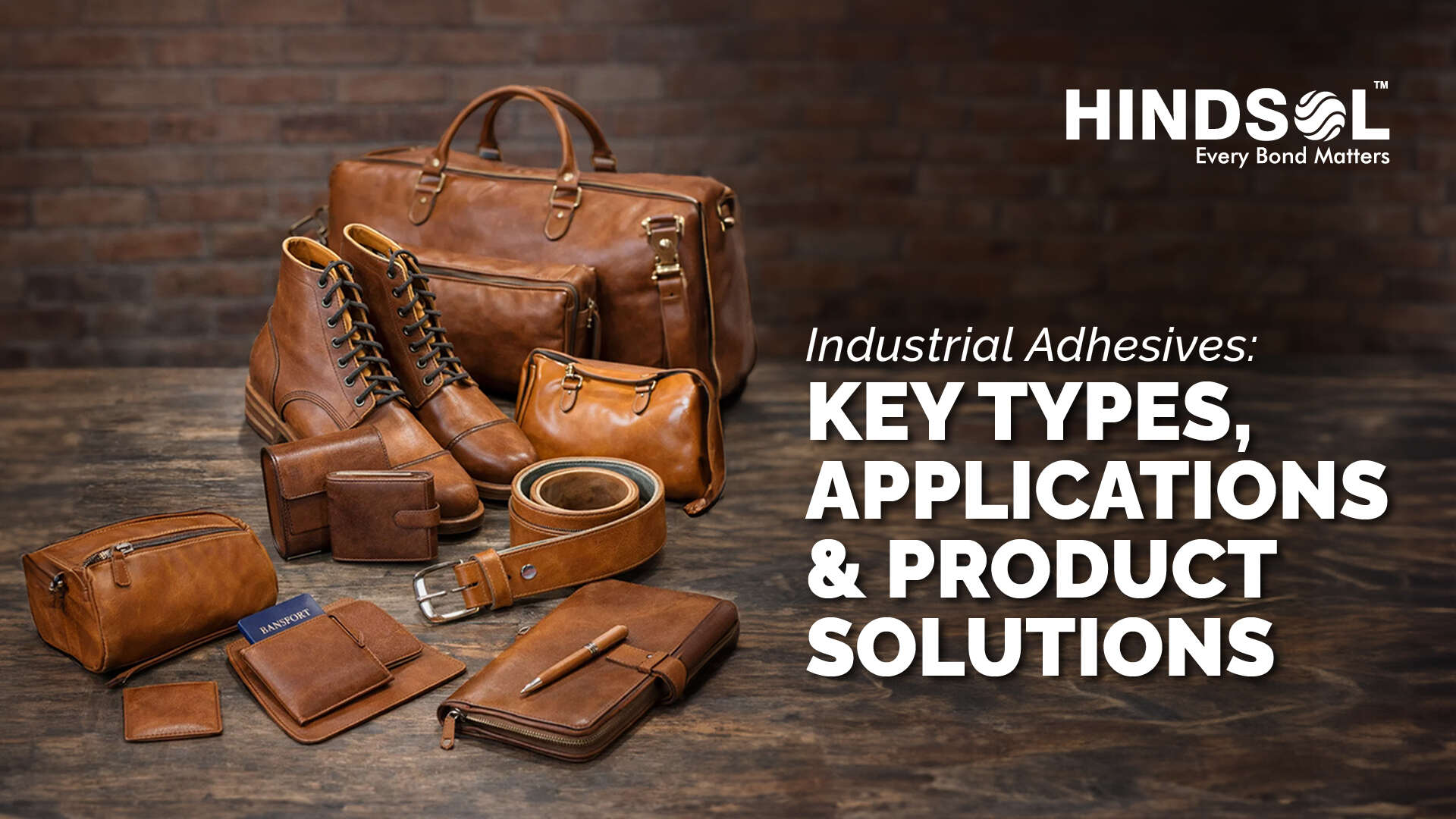
Industrial Adhesives: Key Types, Applications and Product Solutions
In modern manufacturing, bonding is no longer limited to mechanical fasteners or welding. As production demands shift toward efficiency, material versatility, and long-term durability, industrial adhesives have become a critical part of assembly processes across sectors. From automotive components to furniture, HVAC systems, and footwear, adhesives enable manufacturers to achieve strong, consistent bonds while improving production speed and design flexibility.
This industrial adhesive guide explains the key industrial adhesive types, their practical uses, and how the right industrial adhesive solutions support performance-driven manufacturing.
Industrial Adhesives Explained
To understand industrial adhesives explained in a practical sense, it is important to view them as engineered materials designed to bond substrates under specific operating conditions. Unlike general-purpose adhesives, industrial formulations are developed to perform under stress factors such as temperature variation, vibration, moisture, and load-bearing requirements.
Manufacturers rely on these adhesives not only for bonding but also for improving product performance, reducing assembly complexity, and enabling compatibility between dissimilar materials such as rubber, metal, foam, plastics, and wood.
Key Industrial Adhesive Types
Different manufacturing environments require different adhesive technologies. Understanding industrial adhesive types helps in selecting the right solution based on application needs and substrate compatibility.
- Synthetic Rubber Adhesives
These adhesives offer flexibility along with strong bonding performance. They are suitable for applications where materials experience movement or vibration, such as automotive interiors, foam bonding, and footwear assembly. - Polyurethane Adhesives
Polyurethane-based adhesives provide strong and durable bonds with resistance to heat, moisture, and chemicals. They are widely used for structural bonding and applications requiring long-term performance. - Hot Melt Adhesives
Hot melt adhesives are applied in a molten state and solidify quickly upon cooling. They are suitable for high-speed manufacturing processes such as packaging, mattress production, and component assembly. - Water-Based Adhesives
These adhesives are designed for applications where reduced solvent content is required. They offer safer handling and are often used in furniture, paper, and packaging-related processes. - Contact Adhesives
Contact adhesives provide instant bonding when two coated surfaces are pressed together. They are commonly used in laminates, upholstery, and surface bonding applications.
Each of these adhesive technologies supports specific types of adhesives and applications, allowing manufacturers to select solutions aligned with their operational requirements.
Industrial Adhesive Applications Across Sectors
The role of adhesives extends across multiple industries where performance, durability, and efficiency are essential. Understanding industrial adhesive applications helps in identifying the right bonding approach for each use case.
- Automotive Manufacturing
Adhesives are used for bonding interior trims, insulation materials, foam components, and rubber parts. They support vibration resistance and help maintain structural integrity under varying conditions. - HVAC Systems
In HVAC assembly, adhesives are used for duct insulation, panel bonding, and sealing applications. They ensure strong adhesion between materials such as nitrile rubber, foam, and metal surfaces. - Footwear Industry
Adhesives play a central role in bonding soles, leather, EVA materials, and synthetic fabrics. Flexible bonding is essential to maintain comfort and durability in finished footwear. - Furniture and Foam Applications
Adhesives are used to bond foam, fabric, wood, and composite materials in furniture manufacturing. Sprayable and brushable adhesives support both large surface coverage and precision bonding. - Woodworking and Panel Applications
In woodworking, adhesives are used for lamination, edge binding, and panel assembly. These applications require consistent bonding strength and resistance to environmental factors.
These examples highlight how industrial adhesive applications are closely linked to material compatibility and production requirements.
Industrial Adhesive Products and Solutions by HindSol
Selecting the right industrial adhesive products is essential for achieving consistent bonding performance. HindSol Adhesives offers a wide range of industrial adhesive solutions designed to meet the needs of various manufacturing sectors.
- Synthetic Rubber Based Adhesives
HindSol provides high-performance synthetic rubber adhesive suitable for bonding foam, leather, rubber, and metal. These adhesives offer flexibility, strong initial tack, and long-lasting bonds. - Sprayable Adhesive Solutions
Sprayable Adhesive -Designed for large surface applications, sprayable adhesives ensure uniform coverage and efficient use of material, especially in automotive and furniture manufacturing. - Brushable Adhesives for Precision Applications
Brushable Adhesives -For applications requiring controlled adhesive placement, brushable formulations provide better handling and accurate bonding. - Hot Melt Adhesive Products
HindSol’s hot melt Adhesive supports high-speed production environments where quick setting and consistent bonding are essential. - Application-Specific Formulations
HindSol develops adhesives tailored for industries such as HVAC, footwear, automotive, and woodworking, ensuring compatibility with specific substrates and operating conditions.
These solutions are engineered to deliver reliable bonding performance while supporting manufacturing efficiency and product durability.
Choosing the Right Industrial Adhesive
Selecting the appropriate adhesive depends on several factors including substrate type, environmental exposure, and production method. Manufacturers must consider parameters such as bond strength, curing time, flexibility, and application method.
Using well-matched industrial adhesive solutions helps improve product quality, reduce rework, and maintain consistency across production cycles.
Conclusion
As manufacturing continues to evolve, industrial adhesives are playing an increasingly important role in enabling efficient and durable assembly processes. From flexible bonding to structural applications, these adhesives support a wide range of industrial requirements.
By understanding industrial adhesive types, their uses, and the right industrial adhesive products, manufacturers can achieve reliable bonding performance across different applications. A well-informed approach to adhesive selection ensures long-term durability, improved efficiency, and consistent product quality.
Get in Touch
Looking for reliable industrial adhesive solutions tailored to your manufacturing needs?
Connect with HindSol Adhesives to explore advanced bonding technologies designed for performance and durability.
